01
Free consultation
We talk about your operation, in person in the Bajío region or by video call everywhere else, and identify what to fix first.
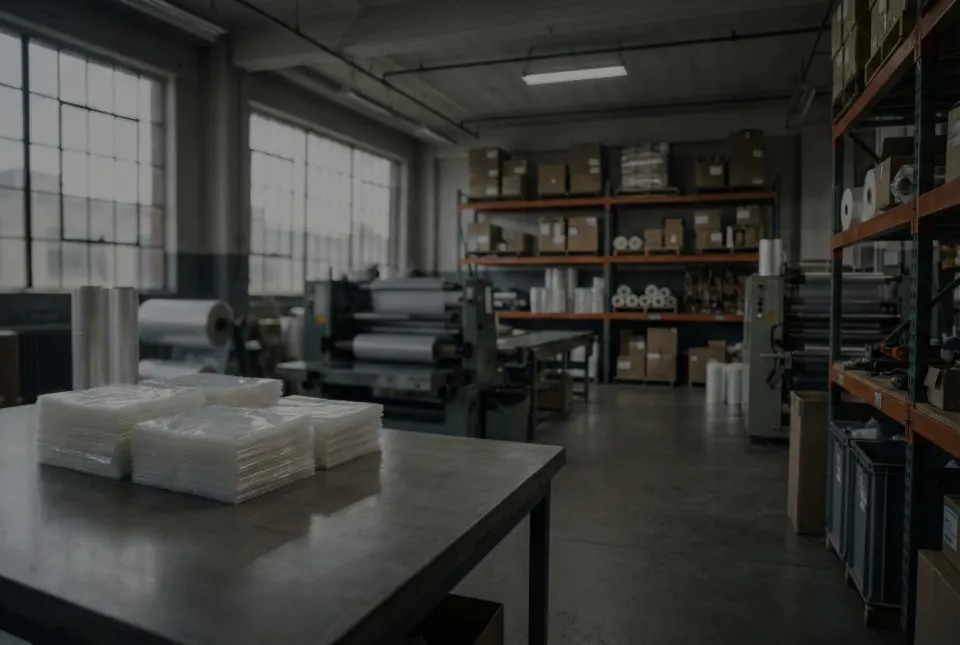
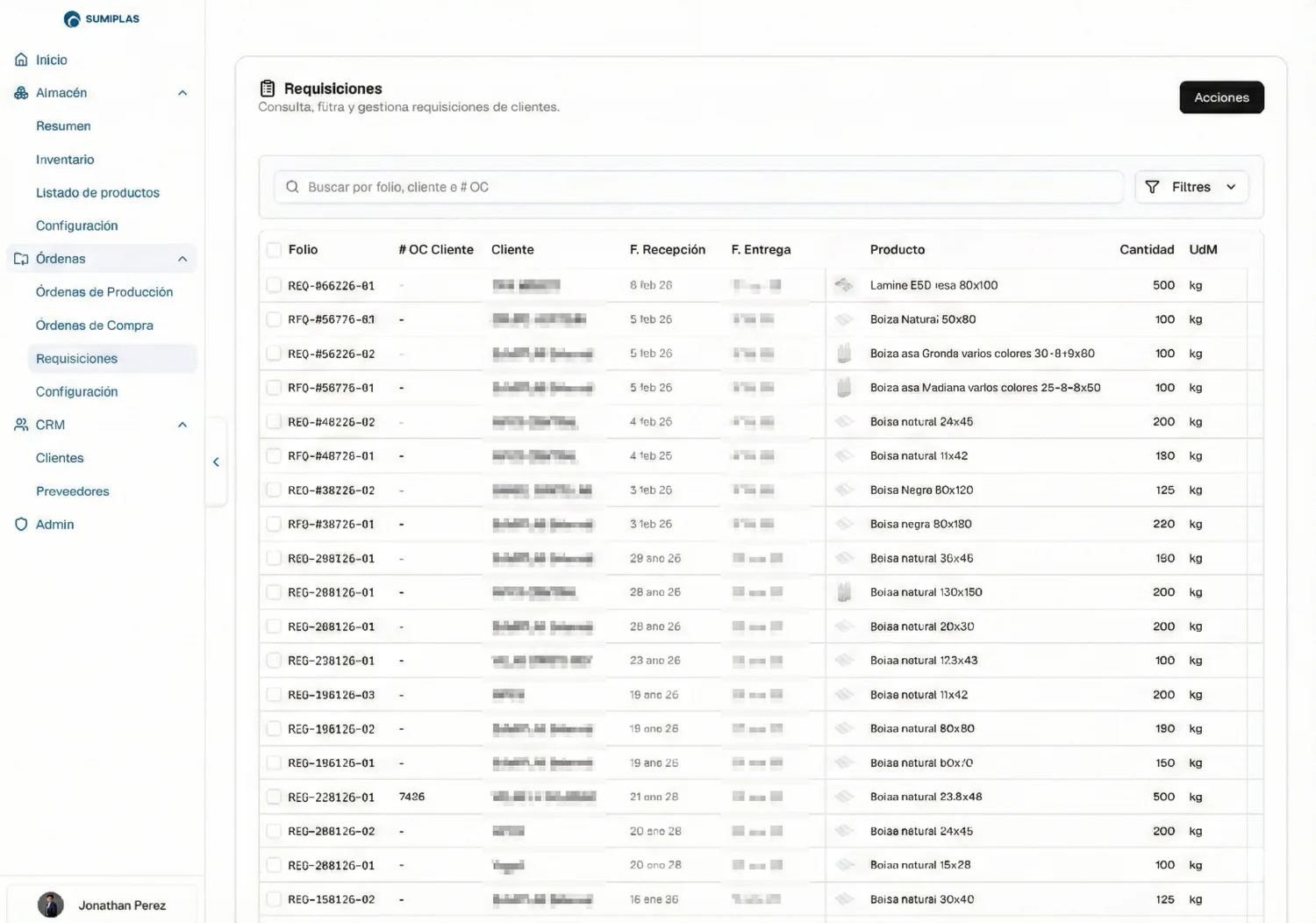
Every customer order and production order with a reference number, status and person in charge, with traceability from raw materials to delivery. For factories and workshops that track their orders in Excel and WhatsApp today.
Clients and Nightly projects












The problem
If any of these sound familiar, it’s worth a conversation. The consultation is free.
They come in over WhatsApp and one always gets forgotten.
To find out, someone has to go ask on the shop floor.
You promise dates without knowing the plant’s real workload.
You find out there’s no raw material once the order has started and the machine stops.
Scrap shows up at the end of the month, when nobody can tell which order or machine it came from.
To find out which material and which shift made a batch, someone digs through paper and files.
What’s included
From the moment an order comes in until the delivery goes out, everyone sees the same information.
With a reference number, status, person in charge and due date.
Entered once, never typed in twice.
What each order uses is deducted automatically.
Requisitions and purchase orders, connected.
Progress, efficiency and on-time deliveries, on dashboards.
Which materials and which people went into each order, with a record of every change. Aligned with ISO 9001 if you need it.
In detail
Bring a completed order: what was requested, planned and actual materials, process steps, output, rejects and delivery. We choose what the operator needs to record and which decision the supervisor needs to make; a dashboard is only reliable when those records are entered on time.
| Test situation | Result to agree on |
|---|---|
| An order is unfinished at a shift change | The next shift sees completed and outstanding quantities without marking the whole order complete. |
| There is downtime, scrap or rework | Stopped time, lost material and product returning to a process stay distinct; rework is not counted as a new sale or new output. |
| Actual consumption differs from the recipe | Planned and actual usage are compared in the same unit, with the person who approved the variation recorded. |
| Only part of an order ships | The customer order keeps its outstanding quantity and the shipment can be linked to production orders and materials. |
Order tracking does not automatically include finite-capacity planning, OEE calculation, sensor integration or machine control. Those scopes need calendars, time/downtime data and access to equipment. We also define whether data entry needs to work offline and how repeated records are resolved during synchronization.
The published Polymer for Sumiplas case covers production, inventory, data migration and performance/waste analysis. For purchasing, maintenance or quality alongside production, see manufacturing software; for tracking alone, we start with that module. Prepare the example with the scope worksheet.
Pricing
Starting-price references. The exact price comes in writing within 1 business day of the free consultation, and you pay in stages, not for the whole system up front.
Custom development
These rights apply to the code we develop specifically for your custom project.
The source code we develop specifically for your company belongs to you, just like your data. Your custom software has no user limit or per-user charge from Nightly. Each person signs in with their own permissions.
Development is paid in stages. Hosting, maintenance, support and third-party services are agreed separately in the proposal.
Code delivery is part of the project. The proposal defines how it is delivered and which documentation and access are included. Nightly products and third-party components and platforms retain their own licences and terms. See delivery terms.
How we work
No commitment and no jargon. You get a written proposal within 1 business day of the consultation.
01
We talk about your operation, in person in the Bajío region or by video call everywhere else, and identify what to fix first.
02
You get a written proposal within 1 business day of the consultation, with the scope, price and timeline split into stages.
03
We build in stages, you review progress at every delivery and we keep improving the system with you.
In writing
That’s what our terms say · How we work
We fix, at no cost, anything that doesn’t work as agreed and that you report within 60 calendar days of each delivery.
You can ask us for a full export at any time, including when the project ends.
We use what you share about your business only for your project and, if you need it, we sign a confidentiality agreement before we start.
If you ask for something outside the proposal, we first tell you in writing how it changes the price and dates, and we only do it if you approve.
When each stage arrives, you review it and tell us anything that doesn’t match what we agreed. We fix that at no cost.
Let us know in writing and you pay only for the work done up to that day.
What business owners ask us before getting started.
We build it around your process, so it adapts to manufacturing, workshops and maquiladoras. In the consultation we review how your orders flow today: if your plant is in Celaya, Salamanca or another city in the Bajío region, we visit it in person, and if it’s elsewhere in Mexico, we do it by video call.
It’s a system where every customer order becomes production orders with a reference number, status, person in charge and date, so you see where each one stands without walking the floor. It records the material used, what was produced and what’s still missing, and warns you when an order is running late. To see how progress gets logged in the plant, read how to know where every order stands without walking the floor.
Complete production control, with customer orders, production orders and materials, starts from about $45,000 MXN and is paid in stages. If you start with a single module, such as production orders only, it can start from about $5,000 MXN. You get the exact price in writing within 1 business day of the free consultation.
We plan a staged launch to reduce disruption: the priority module is tested first and the rest are added afterwards. We agree on data cutoff, balance validation and any change window your plant needs. Spreadsheet data is migrated within the agreed scope and validated before use.
From a tablet or a phone in each area. The operator looks up the order by its number, or scans it if it carries a barcode label, and marks when each step starts and ends; if there was scrap, they log it right there. The screens are simple and show only what that station needs, so logging doesn’t take time away from production. That way, the supervisor and the office see where every order stands without walking the floor, as in Polymer, Sumiplas’s system, where each order’s progress shows in real time. We explain it step by step in production tracking without walking the floor.
The ones that help you decide, not a long list. For example: orders running late against the date you promised the customer, progress by order and by process, on-time deliveries, material used against plan, and scrap by machine or by shift. You see them on dashboards that update on their own, and you can export them to Excel or PDF. In the consultation you choose which ones you need; Sumiplas, for example, uses Polymer to measure each machine’s efficiency and see where material is wasted.
Yes. Since every order has its due date and its progress on record, you see how many orders each process or machine has and which ones are running late before the customer asks. So before accepting a new order, you check the plant’s real workload instead of estimating it from memory, and if an order falls behind, you find out in time to let your customer know.
We define identification, traceability and change records according to your process and applicable requirements. Polymer for Sumiplas was designed in alignment with ISO 9001 together with a certified lead implementer. Software helps retain evidence; it does not certify your plant by itself or replace your quality owner’s review.
No. Most often you keep them for accounting and invoices (CFDI), and we build what they don’t cover, such as production orders, materials and traceability. We connect it within what your version allows, so your accountant keeps working as usual and nobody enters anything twice.
We fix, at no cost, any defects you report within 60 calendar days of the delivery of each stage. You can also end the project whenever you want and pay only for the work done, and your data is always yours: you can export your orders, materials and production history whenever you like.
The source code we develop specifically for your company belongs to you, just like your data. Your custom software has no user limit or per-user charge from Nightly. Each person signs in with their own permissions. Development is paid in stages. Hosting, maintenance, support and third-party services are agreed separately in the proposal. Code delivery is part of the project. The proposal defines how it is delivered and which documentation and access are included. Nightly products and third-party components and platforms retain their own licences and terms.
We’ll tell you what to fix first and what it would cost. We reply the same business day.