They ask the price, then buy elsewhere: how to make it easy to buy from you
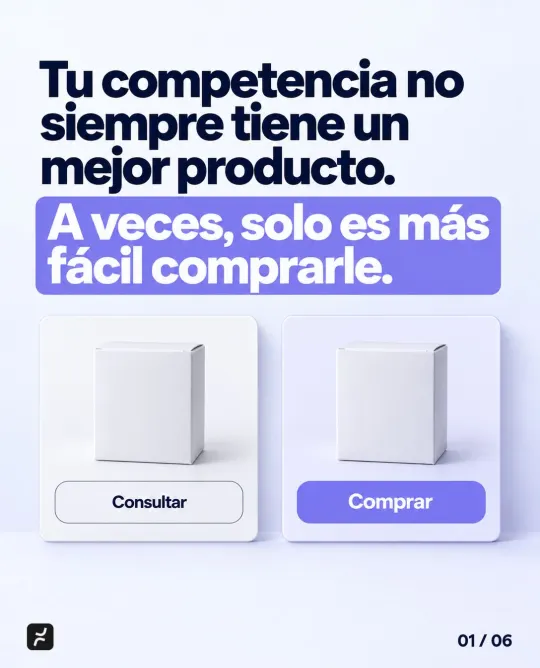
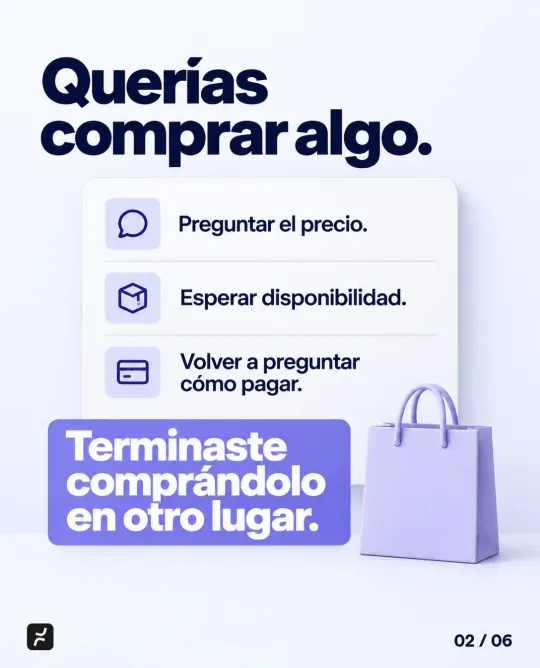
Ask for the price, wait to hear if it’s in stock, ask again how to pay. Every step a customer has to chase is another chance for them to buy from someone else.
Why do customers buy from someone else even when your product is better?
Because buying from the other business took less effort. You’ve probably lived this as a customer: you wanted something, asked for the price, waited to hear whether it was in stock, then had to ask again how to pay. You ended up buying it somewhere else, not because it was better, but because nobody there made you chase the sale.
As owners, we stop seeing it because we know every step: who to ask, where the price list lives and who confirms delivery. The customer doesn’t.
And the experience matters as much as the product. In the fifth edition of Salesforce’s State of the Connected Customer study (2022), which surveyed nearly 17,000 consumers and business buyers in 29 countries, including Mexico, 88% said the experience a company provides is as important as its products or services. Among consumers who switched brands in the past year, 46% cited product availability and 44% cited convenience.


What does every “I’ll get back to you” cost your business?
More than it seems, because you never see it. In Mexico the phrase is “ahorita te confirmo,” roughly “I’ll get back to you in a sec.” When someone asks how much something costs and gets that reply, the conversation is left hanging. If nobody picks it back up, the customer has to remember to write again, and your competitor is one message away.
Those lost sales don’t show up in any report. The customer just stops replying. It’s easy to assume they were “just asking,” when sometimes it was the process that let them go.

Online stores have measured this for years. Baymard Institute, which researches how people shop online, puts the average cart abandonment rate at about 70%, based on 50 studies. Many of those shoppers were just browsing. But among US online shoppers who abandoned a purchase for another reason, 40% left because extra costs were too high, 20% because delivery was too slow, 17% because checkout was too long or complicated and 12% because they couldn’t see the total cost up front.
And those stores already have a checkout button. When you sell over WhatsApp or by phone, each of those doubts is a message someone on your team has to answer, on time.
How can you tell if it’s hard to buy from you?
Check whether any of these happen in your business:
- Your team answers the same questions every day: how much is it, is it in stock, how do I pay, when will it arrive.
- Prices live in someone’s head or on a list that’s different for every sales rep.
- Confirming stock means walking to the warehouse or calling someone else.
- Quotes take days, and nobody knows where they stand.
- Customers go quiet right after asking for the price.
If two or three sound familiar, the problem probably isn’t your product or your price. It’s what customers have to do to buy from you.
What does a customer need to know before buying from you?
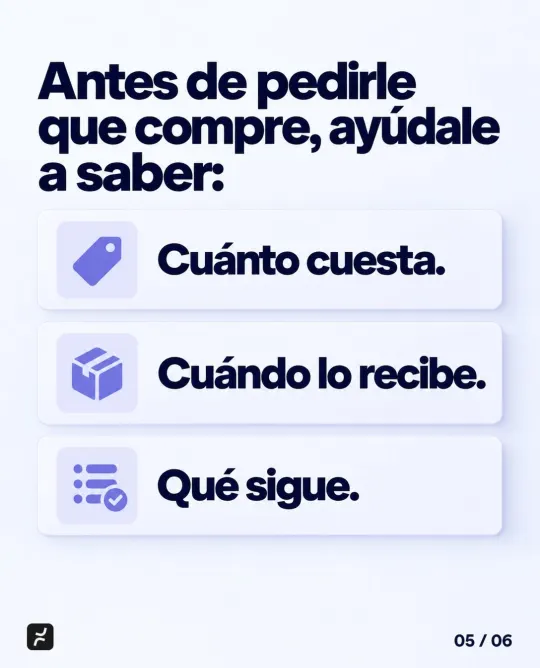
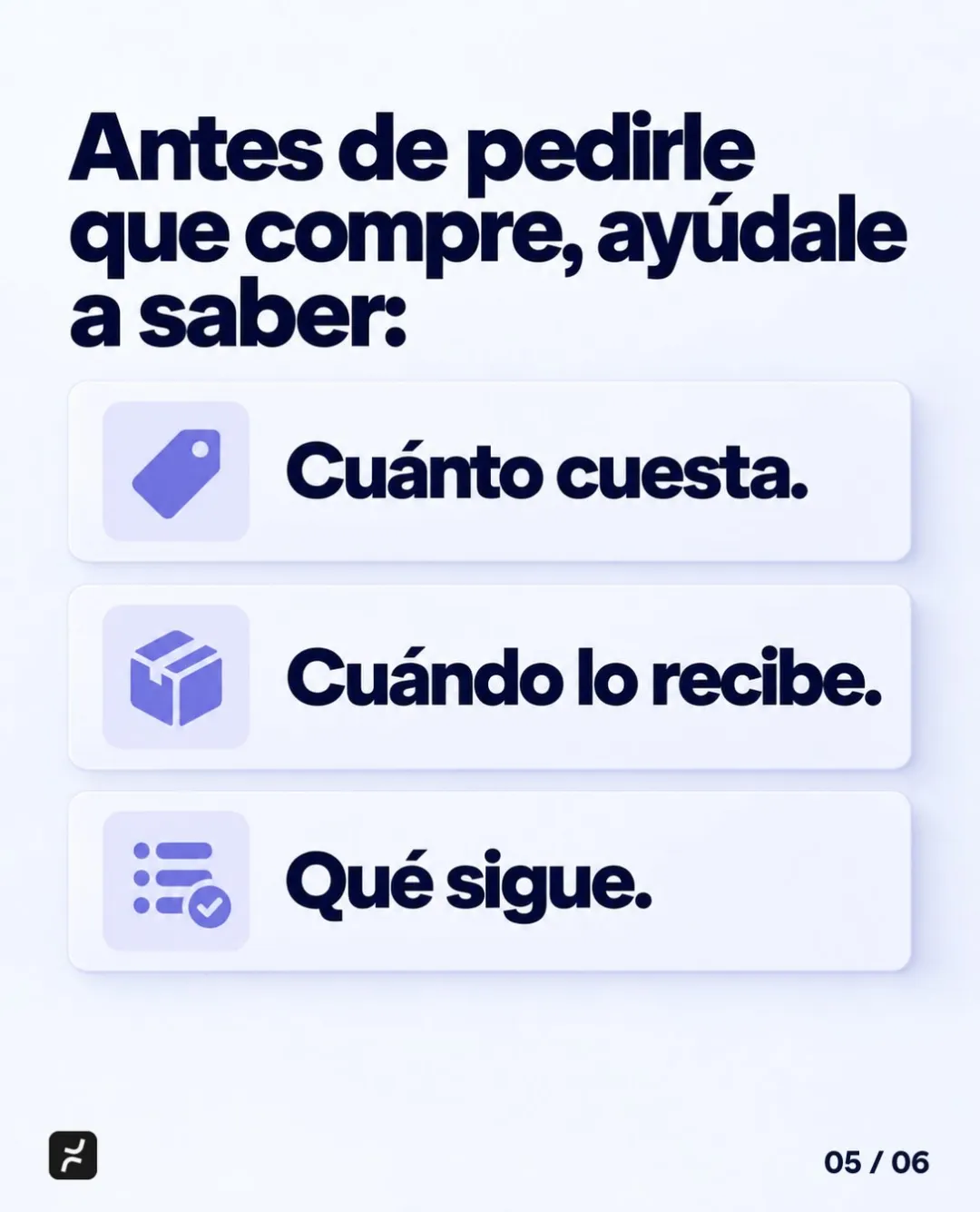
Three things: how much it costs, when they’ll get it and what happens next. Help them find those answers without having to ask. Check how you answer today with this table:
| What the customer asks | A clear answer includes | How to have it ready before they ask |
|---|---|---|
| How much is it? | The total, with tax, shipping and fees | Up-to-date prices; a “starting at” price if you quote custom work |
| Do you have it? | Whether it’s in stock or when it will be | Availability pulled from inventory, not from memory |
| When will I get it? | A delivery date or window | Delivery times published by area or location |
| How do I pay? | Payment methods, details and how to request an invoice | A saved message or a payment link |
| What happens next? | The next step and who takes it | A confirmation with an order number and an update when the status changes |
If you sell to consumers in Mexico, showing the total price isn’t optional. Article 7 BIS of the Federal Consumer Protection Law requires businesses to display the total amount to be paid clearly and visibly, including taxes, fees and any other charges. For sales through electronic means, Article 76 BIS gives consumers the right to know the costs, additional charges and payment methods.
What if you can’t give the price or delivery date right away?
You won’t always have the answer on the spot, and that’s fine. What you can do is make clear what’s missing, who will follow up and when. Compare these two replies:
- “I’ll get back to you.” The customer doesn’t know whether they’ll hear from you today, tomorrow or never, and following up falls on them.
- “To quote this, I need the measurements and the quantity. Once I have them, Ana will send you the quote today before 5 p.m.” The customer knows what’s missing, who’s answering and when.
If you sell custom services, you don’t need to invent a fixed price. Explain what information you need to quote, give a range when it’s feasible and agree on a date for your answer. Sometimes even that can happen on its own. Cleanly, a cleaning company that used to coordinate jobs by phone and text, now lets customers get an instant online quote based on the square meters and features of their space.
How do you apply this if you sell over WhatsApp, by phone or on your website?
You can start today with what you already have:
- WhatsApp. The WhatsApp Business app includes a catalog, quick replies, away messages and labels. Put your products and prices in the catalog, save your payment methods and delivery times as quick replies, use the away message to say when you’ll reply and label open conversations.
- Phone. Keep prices, lead times and payment methods at hand, and log every open request with the customer’s name and the time you promised to get back to them.
- Website. Show your prices, or at least a “starting at,” along with delivery times and payment methods. If you quote, ask for everything you need in the form so you can quote on the first try.
As volume grows, order confirmations and status updates can go out automatically. We explain how in our guide to automating WhatsApp messages.
What if your customers are businesses that order every month?
Then the problem is usually the repetition. The same customer orders nearly the same thing every month over WhatsApp or email. Someone re-enters it, checks which price applies, confirms their credit and then fields “where’s my order?”
In the same Salesforce study, 75% of business buyers said sales conversations are more asynchronous than they used to be, and more of them now happen over messaging and shared documents. For these buyers, easy buying means repeating an order without messaging anyone, seeing their own prices and terms, and checking their orders, balance and invoices whenever they want.
That’s what a customer portal does. At CelMex Unlockers, for example, customers buy from a catalog of more than 3,000 services, see each order’s status in real time and have a balance with an auditable history. To see whether one makes sense for you, read what a customer portal is and when it’s worth it.
Where should you start?
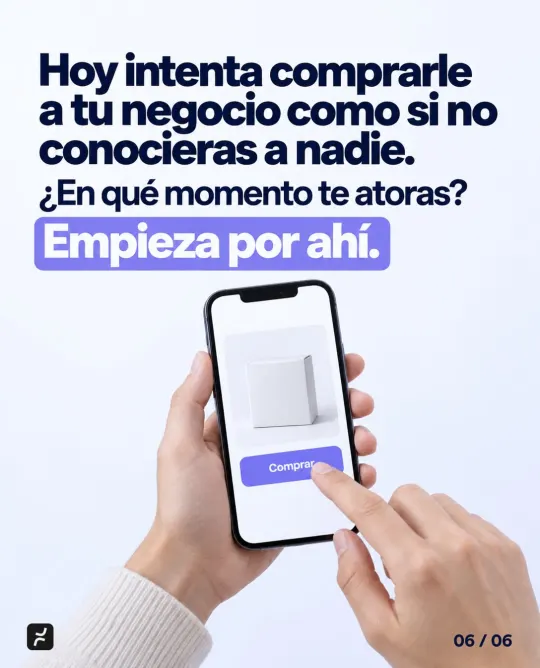
With the new-customer test. Today, try buying from your own business as if you didn’t know anyone there:
- Message your business from another number, or ask someone you trust to do it. Go through your website, your social profile and your quoting process too.
- Write down every question you had to ask and how long each answer took.
- Mark where you got stuck: the thing you had to ask that could have been clear from the start.
- Fix that first, then run the test again next month.
If the test shows that making a sale depends on someone answering on time, let’s talk. In a free consultation, we look at how your customers buy from you today and tell you what to fix first, even if the answer is to clean up your catalog and your replies. See how we build sales systems and customer portals, or book your consultation. Pricing depends on scope, and we send it to you in writing after the consultation.
Related
Frequently asked questions
You don’t need a fixed price for everything. Publish what you can: a “starting at” price or a range when it’s feasible, the information you need to quote and how soon you respond. If you sell to consumers in Mexico, the law requires you to show the total amount to be paid for what you offer.
In one message, give the total price, whether it’s in stock, when they’ll get it and the next step. Save that message as a quick reply in WhatsApp Business. If you’re missing information, say what’s missing, who will answer and by what time.
When your team answers the same questions every day, customers reorder often or each one has different prices and credit terms. A portal lets them order, check status and download documents on their own, and WhatsApp stays for what really needs a person.
Sources
- Cart Abandonment Rate StatisticsBaymard Institute
- State of the Connected Customer, Fifth EditionSalesforce Research
- Federal Consumer Protection Law (Ley Federal de Protección al Consumidor), in SpanishMexico’s Chamber of Deputies
- WhatsApp Business App FeaturesWhatsApp (Meta)
Based on our post on Instagram.
Last updated: