How to document your processes without red tape (so your best employee isn’t the manual)
If everything ends in “go ask…,” something is missing. Here’s how to document one task at a time, test it with someone on your team and decide when your software should guide the steps.
Why is it a problem when everything ends in “go ask…”?
There’s a phrase that sounds harmless: “Go ask him, he’s the one who knows.” It works as long as that person is around. The trouble starts when they spend more time answering questions than doing their own work, and new hires can’t move forward until they track them down.
It’s not an attitude problem. The knowledge simply never left that person’s head. In a Panopto and YouGov survey of 1,001 US employees at organizations with 200 or more people, the average employee lost 5.3 hours a week waiting for information from colleagues or recreating knowledge someone else already had. The same study estimates that 42% of what each person knows about their job isn’t shared by any coworker. Panopto sells knowledge-sharing software, so read the numbers with that in mind.
In a company of 15 or 20 people, there’s often one person per area. When they’re out, there’s nobody else to ask. And often, the person acting as the manual is the owner.




What does it cost when knowledge lives in one person’s head?
It rarely shows up in a report, but you pay for it every day:
| What happens | What it costs you | What prevents it |
|---|---|---|
| The person who knows goes on vacation or gets sick | Orders stall or get done “however we could” | A guide someone else has already tested |
| Someone new joins | Weeks of asking the same questions | Guides for the most frequent tasks |
| Your most experienced person answers questions all day | Their own work falls behind | Pointing to the guide and improving it with every new question |
| Everyone does it their own way | Mistakes, rework and unhappy customers | A correct example and the common mistakes in writing |
| Only the owner knows how to price or approve | They can’t delegate or disconnect | Clear rules, in a guide or built into the system |
Passwords work the same way. If only one person can get into the company’s domain, bank or social media accounts, that’s knowledge living in one head too. Our article on digital keys explains how to get them in order.
Where do you start without writing a huge manual?
With the question that comes up most. One task, one short guide. Don’t try to document the whole company at once: that kind of project is easy to abandon and usually ends up as a folder nobody opens.
To find it, spend a week writing down the questions your team asks you, or asks your most experienced person. How do I check an order? What price does this customer get? How do I set up a new supplier? The one that comes up most is your first guide. If you’re torn between two, pick the task that stops when one person is out.
You don’t need a special format, either. Not even ISO 9001 requires one. ISO and IAF auditing guidance on processes explains that each organization decides how much documented information it needs to be confident its quality management system works, and that the standard doesn’t define any specific format or content. Its examples include process sheets, process maps and IT workflows.
What should a guide include so people actually use it?
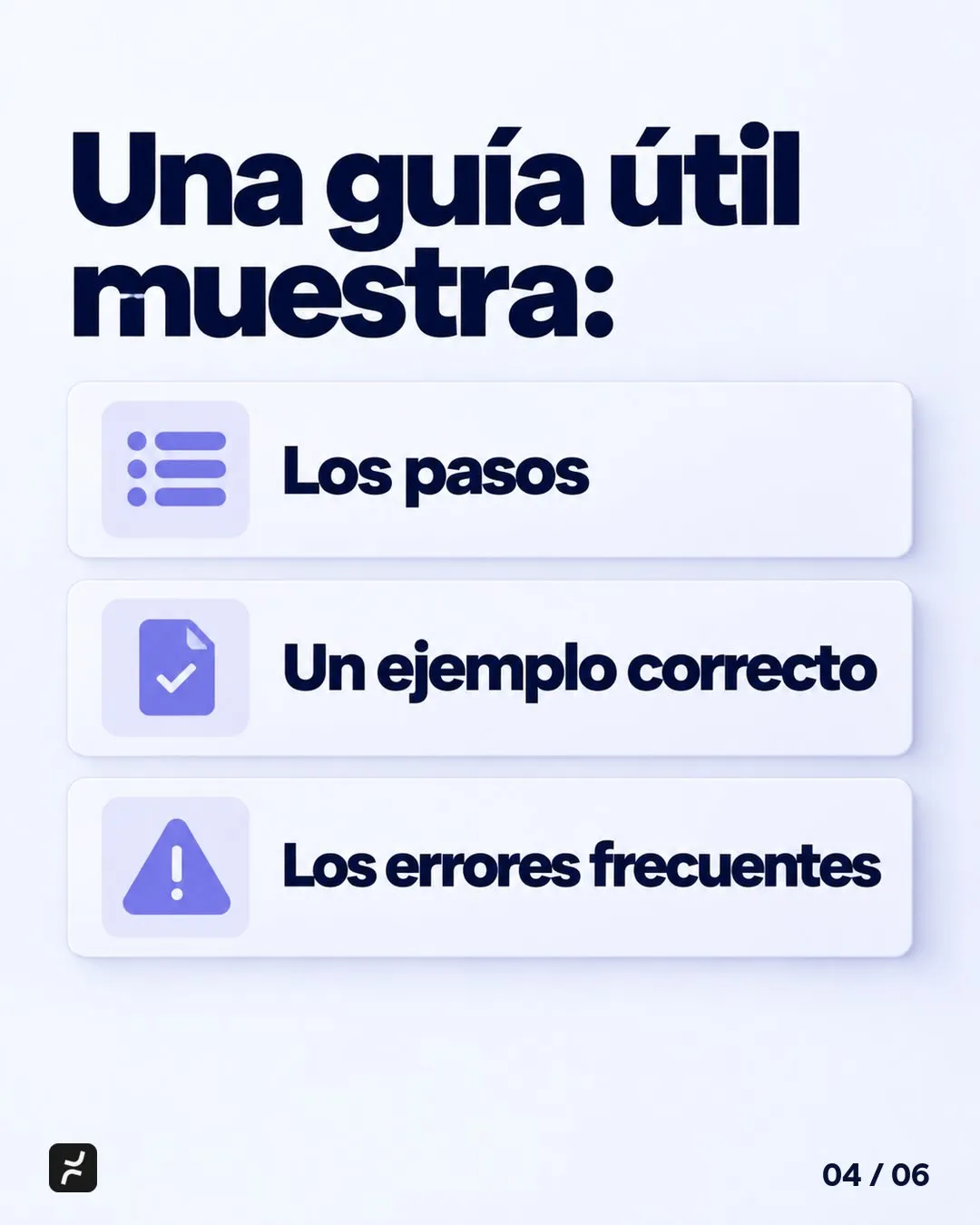
Three things:
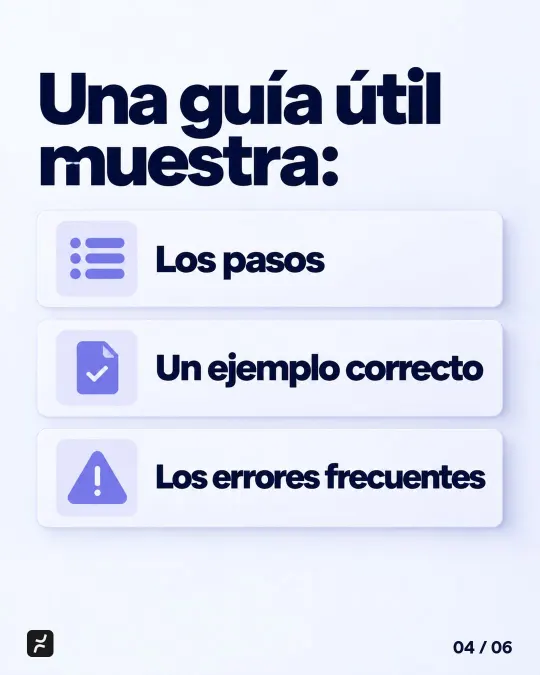
- The steps, in order, one per line, each starting with a verb: “Open the order,” “Compare the price with the customer’s price list,” “Confirm the date with the warehouse.”
- A correct example: a photo, a screenshot or a real order done right, so people can see what finished work looks like.
- The common mistakes: what often goes wrong, how to spot it and what to do if it already happened.
Add who maintains it and when it was last reviewed. Keep it where the work happens: printed next to the machine, on the delivery driver’s phone or inside the system, not in an office drawer. If it’s easier to show than to write, a short video shot on a phone counts too.
Short doesn’t mean weak. The World Health Organization reports that its Surgical Safety Checklist, which takes under two minutes to complete, has been shown to reduce complications and deaths by more than 30%. The checklist doesn’t teach anyone to operate. It makes sure nobody skips a step.
How do you know the guide works?
Test it: someone else should be able to follow it. A guide sitting in a folder proves nothing. The proof is that it helps someone.
- Pick someone who doesn’t usually do the task, like a new hire or someone from another team.
- Give them only the guide and a low-risk trial: a practice order, or a real one that gets checked before it goes out.
- Watch without helping. Every time they ask or hesitate, write down which step it was.
- Fix the guide at exactly those points and test it again with someone else.

Wherever the person needs help, the guide isn’t clear yet. It’s not a test of the person; it’s a test of the guide. Job Instruction, part of the Training Within Industry (TWI) program that has been taught since the 1940s, rests on the same idea, and the Lean Enterprise Institute still teaches it: “If the worker hasn’t learned, the instructor hasn’t taught.”
When should your system guide the process?
A guide works well for tasks you do now and then. When a process repeats many times a day, passes through several people or a missed step costs money, it’s worth building the steps into your system. Instead of asking someone to remember the checklist, the system walks through it with them:
- Required fields: an order can’t be saved without a delivery date or the right price list.
- Checklists inside each order, checked off as the work moves forward.
- Approvals: an unusual discount waits for sign-off from the right person.
- Proof: photos, signatures or documents that must be uploaded to close out the job.
- Statuses and notifications: everyone sees what’s next and whose turn it is.
At Cleanly, for example, every cleaning job is closed with required before-and-after photos. At TramitesLegalesMX, each service asks for exactly the information and files it needs, so nobody has to remember the requirements. And at Sumiplas, a plastic bag manufacturer, production runs on a system aligned with ISO 9001.
The guide doesn’t disappear, though. The system handles the steps, and the guide explains the why and what to do with exceptions.
Does documenting make your best employee less valuable?
Quite the opposite. People should be indispensable for what they contribute, not for what only they know. Once their knowledge is written down, they stop repeating the same explanations every week and can spend that time improving the process, training others or taking a vacation without operations grinding to a halt.
Ask them to write or review the guides, and give them credit. Your team’s experience is too valuable to make them explain the same things from scratch every time.
What can you do this week?
Document one task and test it with someone on your team. You’ll have your first tested guide, and you’ll know whether the format works for your people before you write the second one.
If your processes already pass through several people and a guide isn’t enough, let’s talk. In a free consultation, we look at how your team works and tell you what’s worth moving into a system and what just needs documenting. See how we approach custom software development and business process automation, or book your consultation. Pricing depends on scope, and we send it to you in writing after the consultation.
Frequently asked questions
It means writing down, or recording, how a task is done so someone else can do it with the same result: the steps, a correct example and the common mistakes. It can be a single page, a checklist or steps built into the software your team uses.
The one behind the question your team asks most often, or the one that stops when a single person is out. Start with one task, test it with someone else, then move on to the next.
When the task repeats many times a day, passes through several people or a missed step costs money. A system can require information, approvals and proof before work moves forward, and it records who did what.
Sources
- Inefficient Knowledge Sharing Costs Large Businesses $47 Million Per YearPanopto, via PR Newswire
- ISO 9001 Auditing Practices Group Guidance on: ProcessesISO and IAF
- Safe surgeryWorld Health Organization
- The Human Element of TWI (Training Within Industry)Lean Enterprise Institute
Based on our post on Instagram.
Last updated: