AI ROI: how to tell if AI is actually making your business money
Almost every company uses AI now, but few see it in their numbers. Here’s how to pick one result, measure where it stands today and run a small test before you spend more.
Why isn’t AI showing up in profits yet?
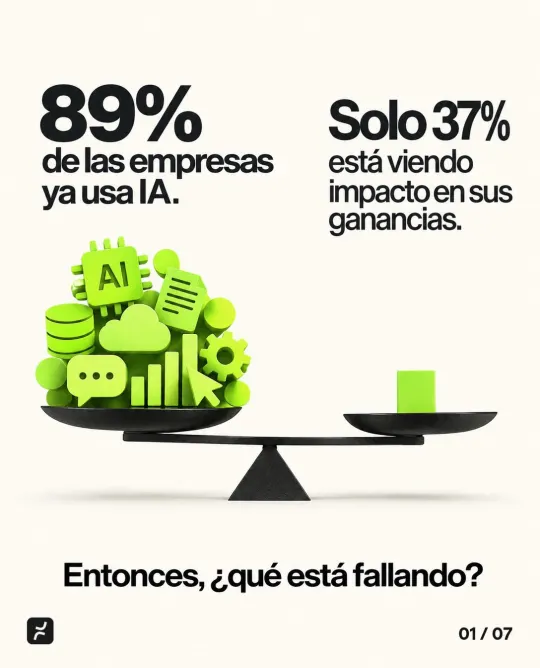
Because using AI and making money with it are two different things. In McKinsey’s The state of AI in 2026 survey of 1,719 participants in 97 countries, 89% say their organization regularly uses AI in at least one business function. But only 37% say AI has contributed positively to EBIT (operating profit), about the same share as the year before.
People do feel a difference: 80% of respondents say AI has improved their personal productivity. The catch is that individual productivity doesn’t flow to the bottom line on its own. If a salesperson saves time writing emails but that time doesn’t turn into more visits or more closed deals, the company isn’t a dollar richer.
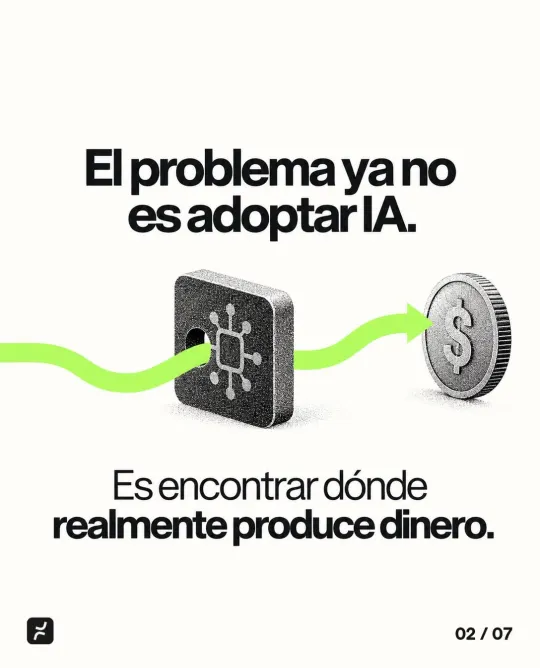
Only about 6% of respondents fall into what McKinsey calls AI high performers: organizations that attribute at least 5% of EBIT to AI and describe its impact as significant. And keep in mind that 36% of respondents work at organizations with more than $1 billion in annual revenue. If many large companies, with budgets and dedicated teams, still don’t see it in their profits, a midsize business can’t afford to invest without measuring. The problem is no longer adopting AI. It’s finding where it actually makes money.
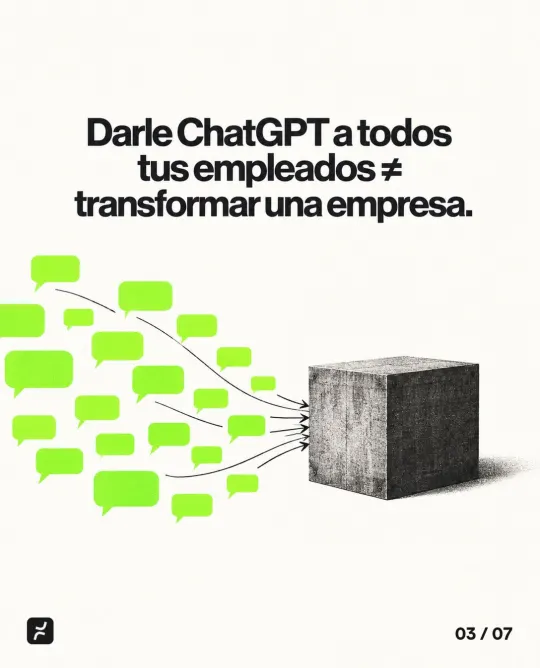
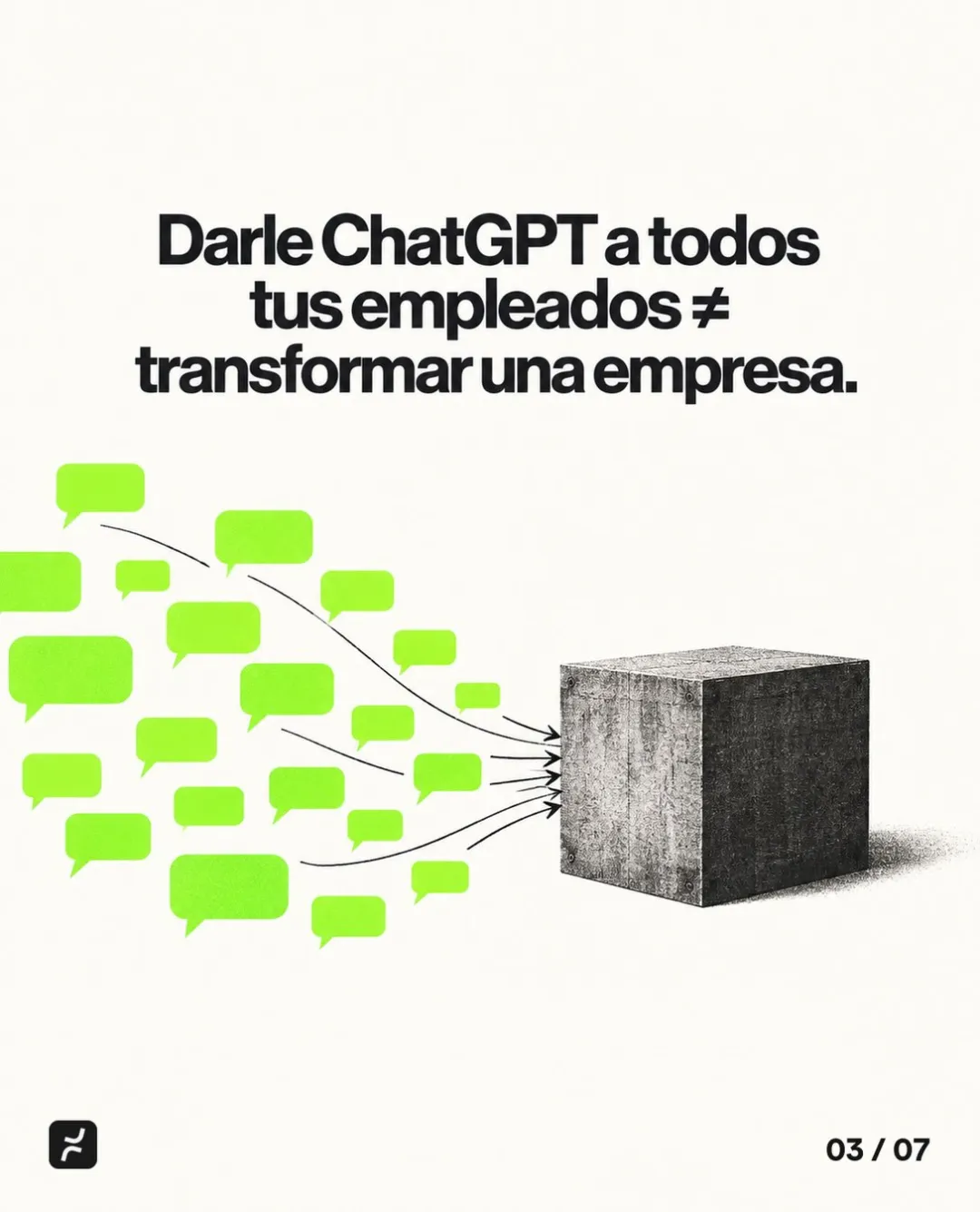
Does giving everyone ChatGPT transform your business?
No. It helps each person write, summarize or research faster, and that’s worth something. But if the process stays the same, so do the results. The quote still waits for the manager’s sign-off, the order still gets entered twice and the lead still gets no follow-up.
McKinsey found a clear difference. Nearly three in four high performers have fundamentally redesigned workflows because of their AI use, compared with one in four of everyone else. They’re also twice as likely to have defined processes for measuring the impact of their AI initiatives. They didn’t bolt AI onto what they already did. They changed how they work to get the most out of it.
Handing out tools without rules carries another risk: someone pasting customer data, prices or contracts where they shouldn’t. Before you connect AI to your systems, read what permissions an AI agent should have.
What should you ask before investing in AI?
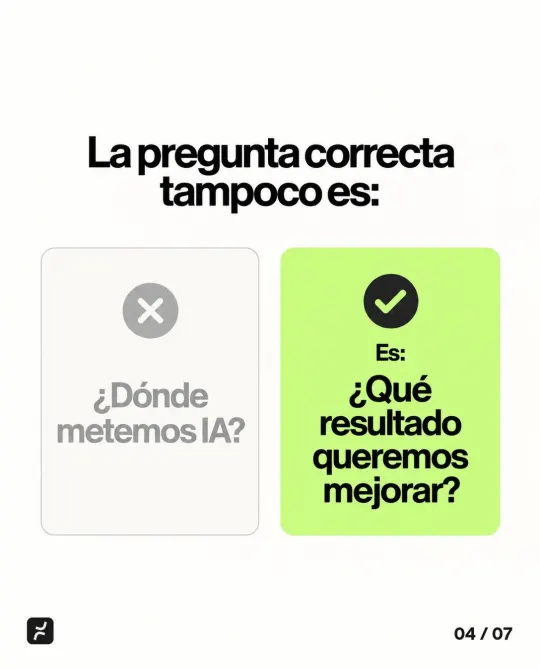
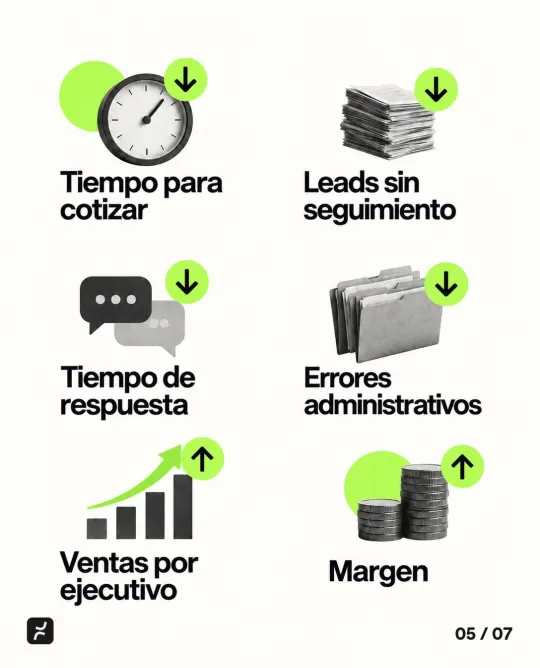
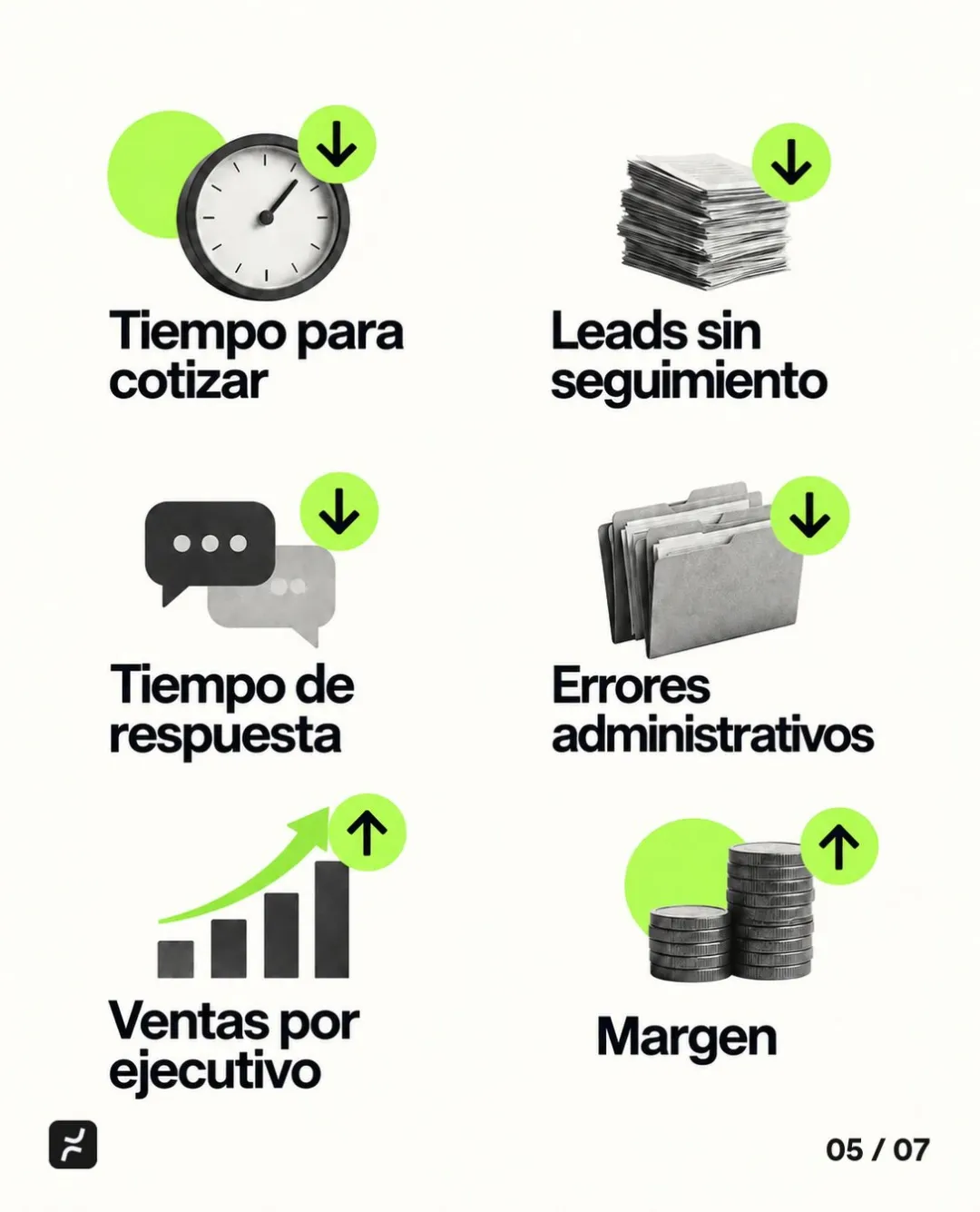
Not “Where do we put AI?” but “What result do we want to improve?” The first question starts with the tool and tends to end with a nice demo. The second starts with a number that already hurts and forces you to measure it. These are results almost any business can start measuring today:
| Result | How to measure it today | Where AI can help |
|---|---|---|
| Time to quote (down) | Hours from when a request comes in until the customer gets the quote | Read the request and draft a quote with your prices for someone to review |
| Response time (down) | Minutes to first reply on WhatsApp, email or phone | Answer common questions and route each case to the right person |
| Leads with no follow-up (down) | Leads this month that never got a second touch | Flag who still needs a call and draft the message |
| Administrative errors (down) | Invoices, orders or entries that had to be corrected | Check details against the order before invoicing |
| Sales per rep (up) | Deals closed per salesperson each month | Take data entry and searching off their plate so they spend more time selling |
| Margin (up) | Margin per order or product line | Spot discounts outside policy or costs that weren’t billed |
Pick based on your business. For a distributor, it might be time to quote. For a manufacturer, errors when orders move to production. For a service company, response time. For a retailer, margin lost to discounts. If you pick response time, WhatsApp as your front door explains how to connect the chat to your systems.
What is a baseline, and why is there no ROI without one?
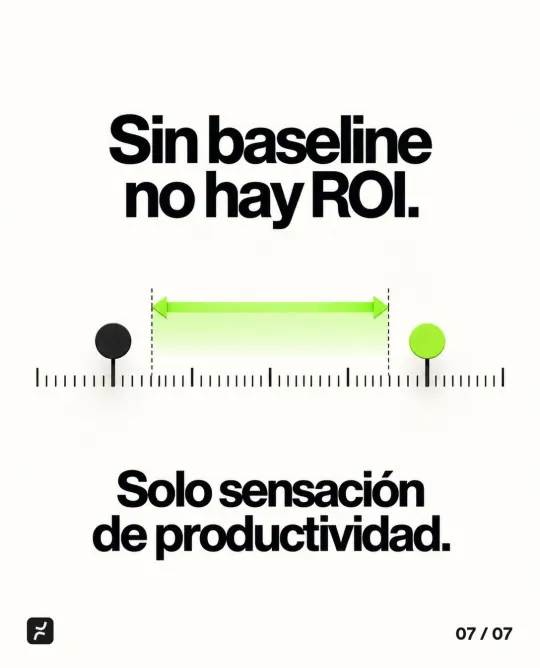
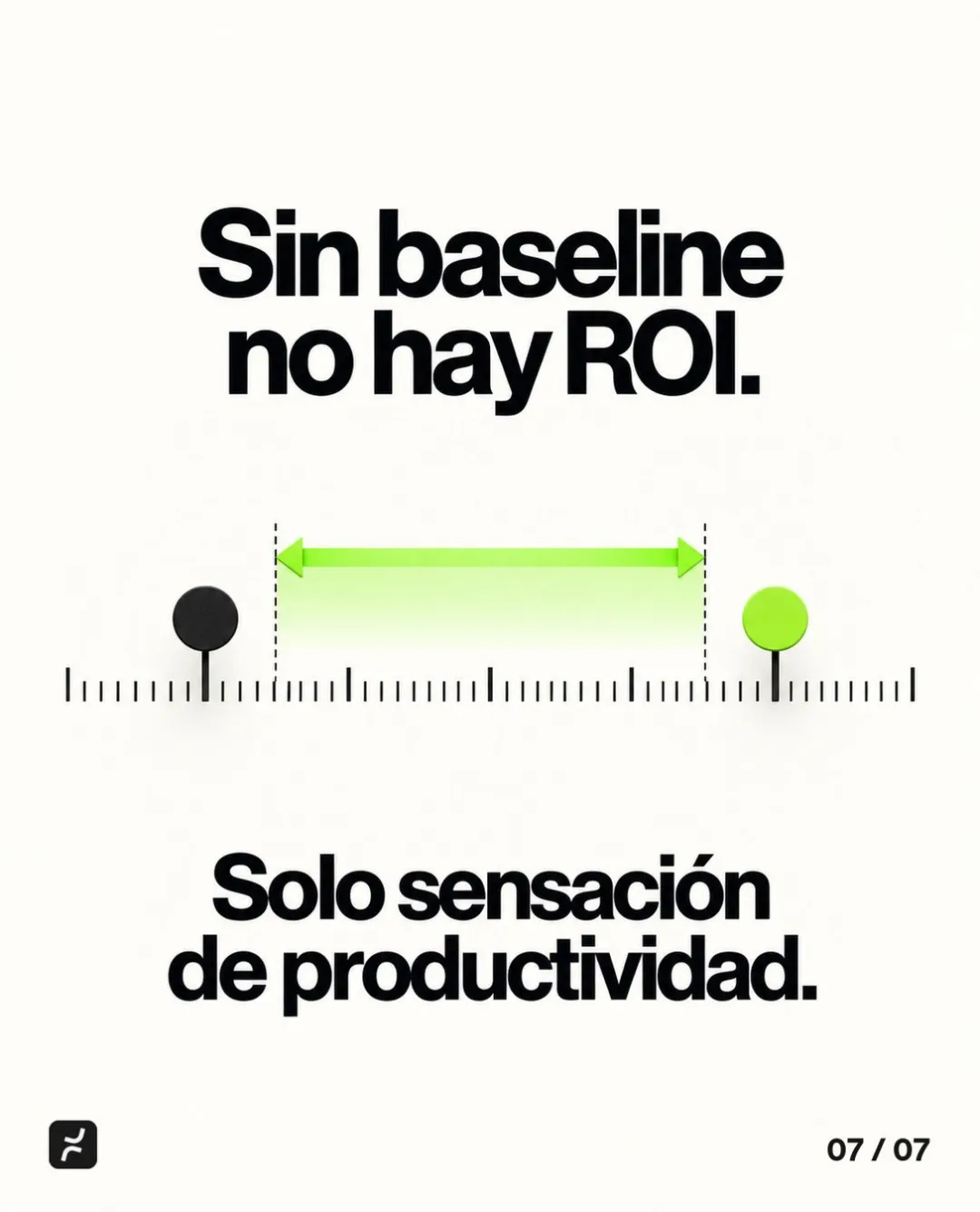
A baseline is where your number stands today, before you change anything: how many hours a quote takes, how many leads go without follow-up, how many invoices need fixing. Without it, all you have after a pilot is an impression. And impressions can be wrong.
A 2025 experiment by METR, an independent research group, showed how wrong. Sixteen experienced software developers worked on real tasks that were randomly assigned to allow or disallow AI. With AI, they took 19% longer. Afterward, they believed AI had made them 20% faster. The authors caution that the result doesn’t generalize to every kind of work, but the lesson is clear: what it feels like and what actually happens can be very different.
Measuring also confirms what does work. In a study published by NBER covering 5,179 customer support agents, those with an AI assistant resolved 14% more issues per hour on average, and novice and lower-skilled agents resolved 34% more. The result was defined from the start: issues resolved per hour.
How do you run a small AI pilot you can actually measure?
With one result, one process and clear rules before you start:
- Pick one result from the table. Just one.
- Measure the baseline over a few normal weeks, the same way you’ll measure it afterward. If your business is seasonal, compare against a similar period.
- Set the target and the cutoff: how much the number should improve and by when. If it doesn’t, the pilot ends.
- Test it in one process, with a small team and a person who reviews the AI’s work before it reaches a customer.
- Count every cost: licenses, usage fees, the connection to your systems and the hours your team spends learning and reviewing.
- Compare the same numbers. ROI is what you gain or save, minus what it costs, divided by what it costs.
- Decide: scale it, adjust it or shut it down.
Sometimes the pilot proves you didn’t need AI at all. If quotes are slow because nobody knows who approves them, a process fix or a simple automation will do. That’s a good outcome too: you avoided an investment. If the process isn’t even written down, start by documenting it.
What changes in 2026 for companies already using AI?
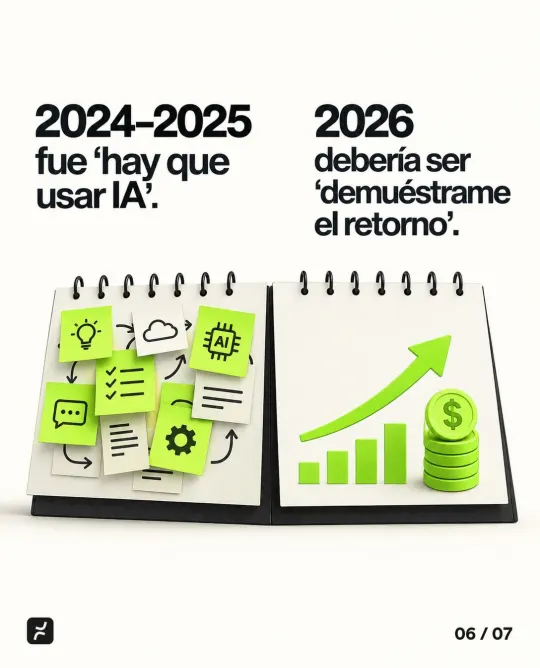
2024 and 2025 were the years of “we have to use AI.” 2026 should be the year of “show me the return.” The same McKinsey survey found that AI operating costs are already limiting AI use at about one in five organizations, even though most plan to invest more. When AI is a monthly bill, the question stops being whether you use it and becomes what it brings in.
For an owner-led business, that’s an advantage. You don’t need a committee or a big program. You need one number, one pilot and the discipline to shut down what doesn’t pay.
It also helps when AI has a specific job inside the system you already work in, instead of living as a standalone tool. That makes it easier to measure what it does. On the Executive Engineers platform, for example, AI helps capture receipts and digital cards in the same place where their projects and invoicing live.
Where should you start?
With the table. Pick the result that costs you the most, have your team measure it for a few weeks and write down what it costs you today in hours and lost sales. That gives you a fair way to compare any proposal, AI or not.
If you want to know where AI could make your business money, see how we approach business process automation. In a free consultation, we’ll pick a measurable result with you, look at how to measure it today and tell you whether AI, a simple automation or a process fix makes the most sense. Pricing depends on scope, and we send it to you in writing after that call.
Related
Frequently asked questions
Take what AI brings in (hours saved times their cost, extra sales times their margin, errors avoided), subtract what it costs (licenses, usage, the connection to your systems and your team’s hours) and divide by the cost. To do that, you need a baseline: where that number stood before the pilot.
Long enough to compare against your baseline at a normal workload. For many processes, a few weeks is enough. What matters is deciding before you start on the target, the review date and what happens if you miss it.
Yes, for individual tasks like drafting, summarizing or research. But to see it in your numbers, you need to pick a process, measure it and adjust how the work gets done. Before handing out access, decide what information can and can’t be shared with those tools.
Sources
- The state of AI in 2026: On the road to ROIMcKinsey & Company
- Measuring the Impact of Early-2025 AI on Experienced Open-Source Developer ProductivityMETR
- Generative AI at WorkErik Brynjolfsson, Danielle Li and Lindsey R. Raymond, NBER
Based on our post on Instagram.
Last updated: